How to Get on Wikipedia for AI Visibility
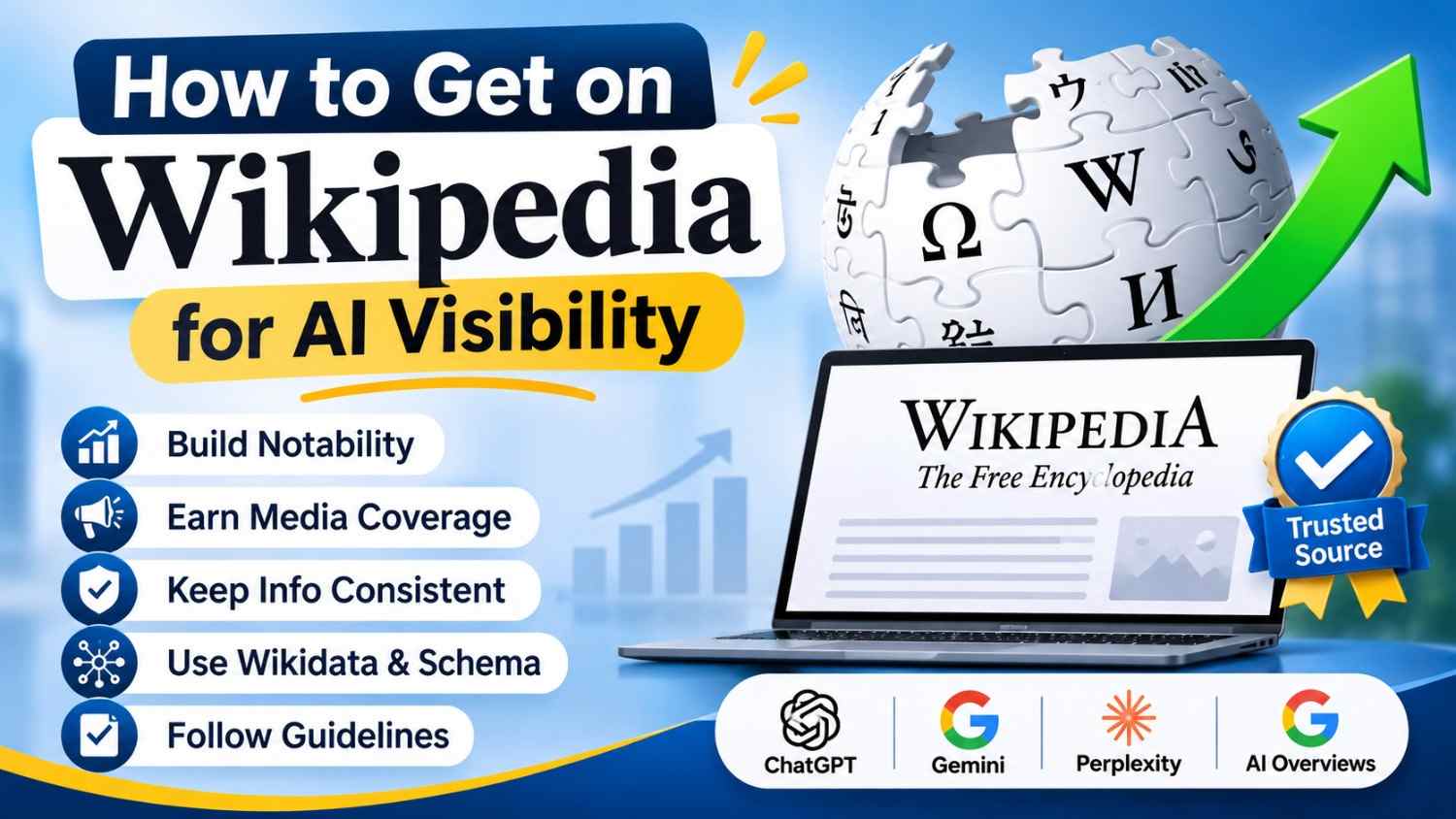
Getting your business featured on Wikipedia can strengthen its digital presence and help search engines and AI platforms understand your brand. As people increasingly use ChatGPT, Google AI Overviews, Gemini, and Perplexity to discover companies, accurate, verifiable information across trusted sources is becoming more important.
However, getting a Wikipedia page is not as simple as creating an account and publishing company information. Wikipedia has strict editorial guidelines, particularly around business notability, independent references, and neutral writing.
If you want to know how to get on Wikipedia for AI visibility, this guide explains the requirements, preparation process, and strategies that can support your brand's presence in AI-powered search.
Why Does Wikipedia Matter for AI Visibility?
Wikipedia is a widely referenced knowledge resource. Its articles and associated data can help search engines and AI systems understand people, businesses, technologies, and organizations.
A well-supported Wikipedia article can contribute to:
- Brand recognition: Establishes a publicly accessible reference about your organization.
- Entity recognition: Helps distinguish your business from similarly named companies.
- AI search visibility: Creates another credible source that AI systems may retrieve or reference.
- Knowledge Graph connections: Supports the discovery of relationships between organizations, people, and industries.
- Brand credibility: Provides independently sourced information about your business history and achievements.
However, having a Wikipedia page does not guarantee citations, recommendations, or better rankings in AI search results. It is one part of a broader digital authority strategy.
How to Get on Wikipedia: 6 Essential Steps
1. Establish Your Business Notability
The first requirement is demonstrating that your company deserves an independent Wikipedia article. Wikipedia generally expects significant coverage in reliable sources that are independent of the subject.
Useful sources include:
- Established newspapers and news publications.
- Independent industry magazines.
- Reputable business publications.
- Academic journals and research publications.
- In-depth interviews and editorial coverage.
Your website, paid advertisements, company press releases, and social media posts are not substitutes for independent coverage.
2. Build a Strong Digital PR Strategy
Digital PR helps businesses earn genuine media coverage and establish their reputation within their industries.
Focus on publishing original research, sharing specialist insights, participating in industry discussions, and developing meaningful relationships with journalists.
Consistent media coverage can also support brand authority and provide independent references that Wikipedia editors can evaluate.
3. Create Consistent Brand Information
AI search engines need reliable information to identify your business correctly. Inconsistent company descriptions, addresses, founding dates, and leadership details can create confusion.
Maintain accurate information across:
- Your official website and About page.
- LinkedIn company profiles.
- Industry directories.
- Business publications.
- Authoritative company databases.
Consistency helps strengthen your brand's online entity signals.
4. Develop Your Wikidata Presence
Wikidata is a structured knowledge database connected to the Wikimedia ecosystem. It stores information about entities, including companies, people, locations, and organizations.
A properly sourced Wikidata entry can help describe your business through structured properties and relationships.
Make sure information is verifiable and follows Wikidata's notability and sourcing requirements. A Wikidata entry is not a replacement for Wikipedia eligibility, but it can complement a broader entity SEO strategy.
5. Follow Wikipedia's Editorial Guidelines
Avoid creating promotional articles or presenting your business as more important than independent sources establish.
If you have a financial or professional connection with the company, disclose that conflict of interest. Paid editors must follow Wikipedia's disclosure requirements.
You can prepare a neutral draft and submit it through Wikipedia's Articles for Creation process. Independent editors will decide whether the article meets the platform's standards.
6. Strengthen Your Website's Structured Data
Wikipedia alone cannot establish your complete digital identity. Your website should also communicate accurate information about your organization.
Implement relevant Schema.org structured data, including:
- Organization schema for business details.
- Person schema for founders and key authors.
- Article schema for editorial content.
- SameAs properties to connect verified profiles and references.
You can use an Organization Schema Generator to create structured business information.
How Does Wikipedia Help ChatGPT and Other AI Search Engines?
AI-powered platforms use different combinations of training data, search indexes, knowledge sources, and real-time retrieval to generate responses.
For example:
- ChatGPT: May retrieve and cite Wikipedia or other authoritative sources when answering factual questions.
- Google Gemini: Can use information connected to Google's broader knowledge systems and online sources.
- Perplexity: May reference Wikipedia alongside news publications, research, and other websites.
- Google AI Overviews: Can synthesize information from multiple indexed sources.
A Wikipedia article can provide useful background information, but AI platforms do not depend exclusively on Wikipedia. Independent media coverage, authoritative websites, structured information, and relevant industry references also matter.
How to Measure Your Wikipedia and AI Search Visibility
Publishing an article is not the final step. Businesses should regularly evaluate how accurately AI platforms represent their brand.
Here are some realistic ways to measure progress:
- Search your company name across ChatGPT, Gemini, and Perplexity.
- Ask industry-related questions that should naturally mention your business.
- Check whether AI platforms recognize your products, services, leadership, and achievements.
- Review which websites and publications appear as citations.
- Compare your brand's visibility with relevant industry competitors.
Track these results monthly to identify improvements and missing information.
Common Mistakes to Avoid When Getting on Wikipedia
Many businesses damage their Wikipedia opportunities by approaching the platform as another advertising channel.
Avoid these mistakes:
- Creating a company article without meeting notability requirements.
- Using promotional language instead of neutral descriptions.
- Relying entirely on company websites and press releases for references.
- Paying undisclosed editors to publish promotional content.
- Adding unsupported achievements or misleading company information.
- Treating Wikipedia publication as a guaranteed AI ranking strategy.
Instead, prioritize independent recognition, reliable references, and accurate brand information.
Final Thoughts
Learning how to get on Wikipedia for AI visibility requires more than publishing a company profile. Businesses must establish genuine notability, earn independent media coverage, maintain consistent brand information, and develop a strong digital presence.
Combining Wikipedia eligibility with Wikidata, digital PR, entity SEO, and structured data creates a stronger foundation for brand recognition across traditional and AI-powered search platforms.
Start by improving your company's online credibility and making its information easy to verify. When your business genuinely meets Wikipedia's requirements, an independently reviewed article can become another valuable part of your long-term AI visibility strategy.