Recipe Schema: A Complete Guide to Recipe Structured Data
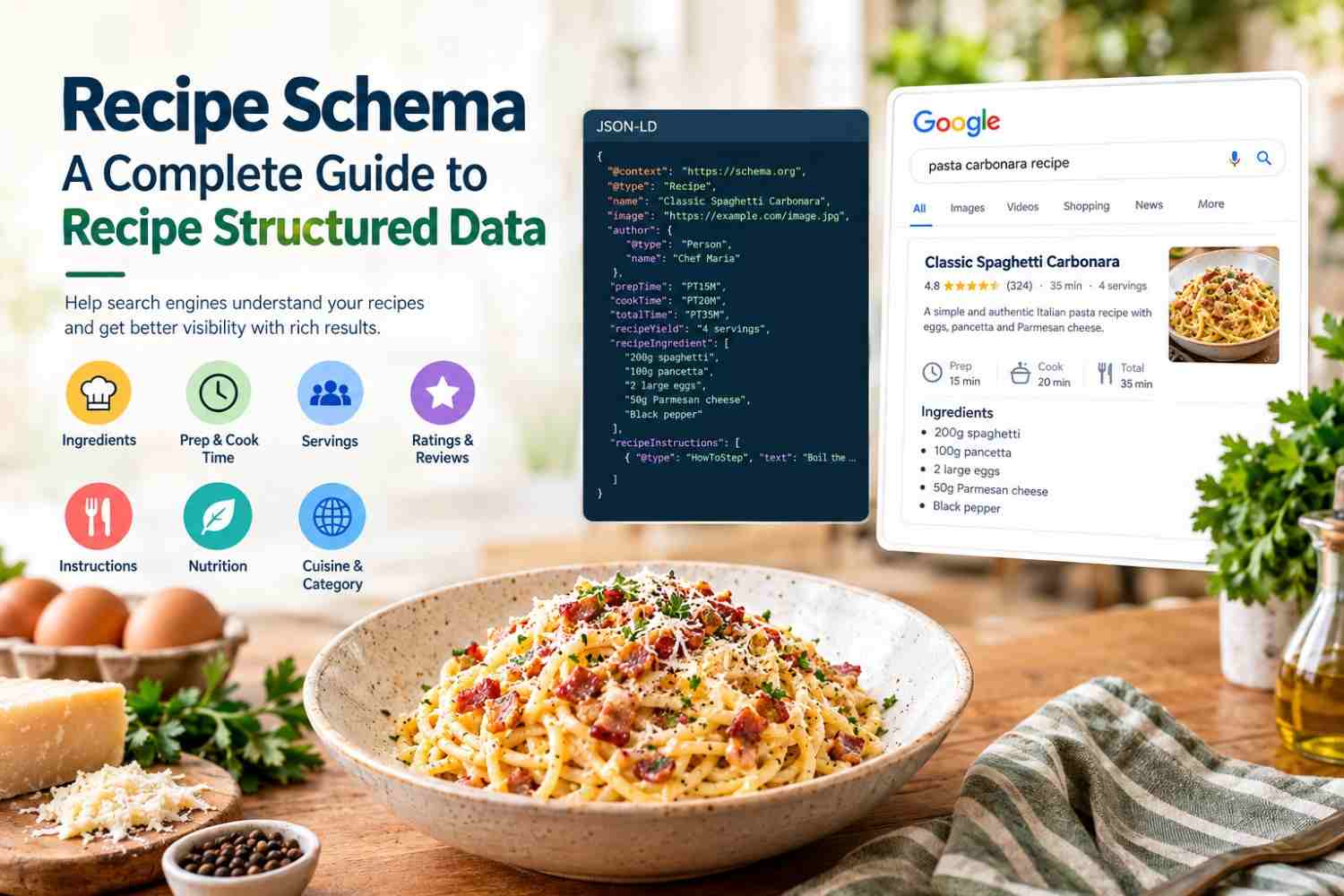
Food and recipe websites compete for attention in search results, where users often want quick information such as ingredients, cooking time, calories, ratings, and preparation steps. Recipe Schema helps search engines understand these details by adding structured data to a recipe page.
Recipe structured data uses the Recipe type from Schema.org and can help eligible recipe pages appear with enhanced search features. Google states that recipe markup can support recipe-related appearances in Google Search and Google Images, although structured data does not guarantee that a rich result will be displayed.
What Is Recipe Schema?
Recipe Schema is structured data that describes a specific dish and its preparation information in a format search engines can understand.
Using JSON-LD, a recipe page can communicate information such as:
- Recipe name
- Author
- Recipe image
- Ingredients
- Preparation time
- Cooking time
- Total time
- Number of servings
- Cuisine
- Recipe category
- Nutrition information
- Cooking instructions
- Genuine ratings and reviews
Google recommends using structured data that accurately represents the visible content on the page.
Why Is Recipe Schema Important for SEO?
Adding structured data does not directly guarantee better rankings. Instead, it gives search engines clearer information about the content and can make a page eligible for enhanced search appearances.
For recipe websites, this can be particularly useful because searchers may see useful recipe information directly in search features.
For example, properly implemented recipe markup can help search engines understand:
- What dish the page describes
- How long it takes to prepare
- How long it takes to cook
- What ingredients are required
- How many servings the recipe produces
- What steps are required to prepare it
This makes Recipe Schema Markup an important part of technical SEO for food blogs, cooking websites, recipe publishers, and culinary businesses.
Important Recipe Schema Properties
Google supports several properties for the Recipe structured data type. Some of the most useful include:
Recipe Name and Image
The name property identifies the dish, while image provides an image of the completed recipe. Google recommends using crawlable and indexable images that accurately represent the recipe.
Ingredients
The recipeIngredient property lists the ingredients required to prepare the dish.
Each ingredient should include the specific information needed by someone following the recipe, rather than unnecessary descriptions.
Cooking and Preparation Time
You can use:
- prepTime for preparation
- cookTime for cooking
- totalTime for the complete preparation and cooking process
These values should use the appropriate ISO 8601 duration format.
Recipe Instructions
The recipeInstructions property describes how to prepare the dish. Google recommends using HowToStep when appropriate because it clearly separates individual preparation steps.
How to Add Recipe Schema Markup
Adding Recipe Schema does not have to be complicated. A practical workflow includes:
- Create accurate recipe content with ingredients and instructions.
- Generate the JSON-LD markup using a schema generator.
- Add the markup to the corresponding recipe page.
- Validate the structured data before publishing.
- Check the live page after implementation.
- Monitor Search Console for structured data issues.
If you're new to structured data, this guide on adding schema markup explains the implementation process in more detail.
Validate Your Recipe Schema Before Publishing
Validation is an important part of implementing structured data. Errors can occur when required information is missing, values are incorrectly formatted, or markup does not accurately represent the page.
You can use the Schema Markup Validator to check your JSON-LD and identify missing or problematic properties.
It is also useful to test the page with Google's Rich Results Test. Google recommends validating structured data and fixing critical issues before deployment.
Use JSON-LD for Recipe Structured Data
JSON-LD is a practical way to implement structured data because it keeps the markup separate from the visible HTML. It also makes schema easier to generate, maintain, and update.
You can learn more about JSON-LD structured data and how it works with search engines.
Keep Recipe Schema Accurate
One of the most important rules is to make sure your structured data matches what users can actually see on the page.
Avoid:
- Inventing ratings or reviews
- Adding ingredients that are not part of the recipe
- Using incorrect cooking times
- Marking up hidden recipe information
- Adding irrelevant schema types
- Leaving outdated information in the markup
For example, if a recipe displays a genuine rating and review count, those values can be represented appropriately. If there are no genuine ratings, you should not create them simply to make the search result appear more attractive.
Final Thoughts
Recipe Schema gives search engines structured information about recipes, including ingredients, instructions, preparation times, images, servings, and other useful details. When implemented accurately, it can make recipe pages eligible for enhanced search appearances.
The key is not simply adding as much schema as possible. Use the Recipe type when the page genuinely contains a recipe, keep every property accurate, and validate the JSON-LD before and after implementation. For websites managing multiple structured-data types, a reliable schema markup generator can make creating and maintaining JSON-LD much easier.