Schema Markup Validator: How to Test and Fix Structured Data for Better SEO
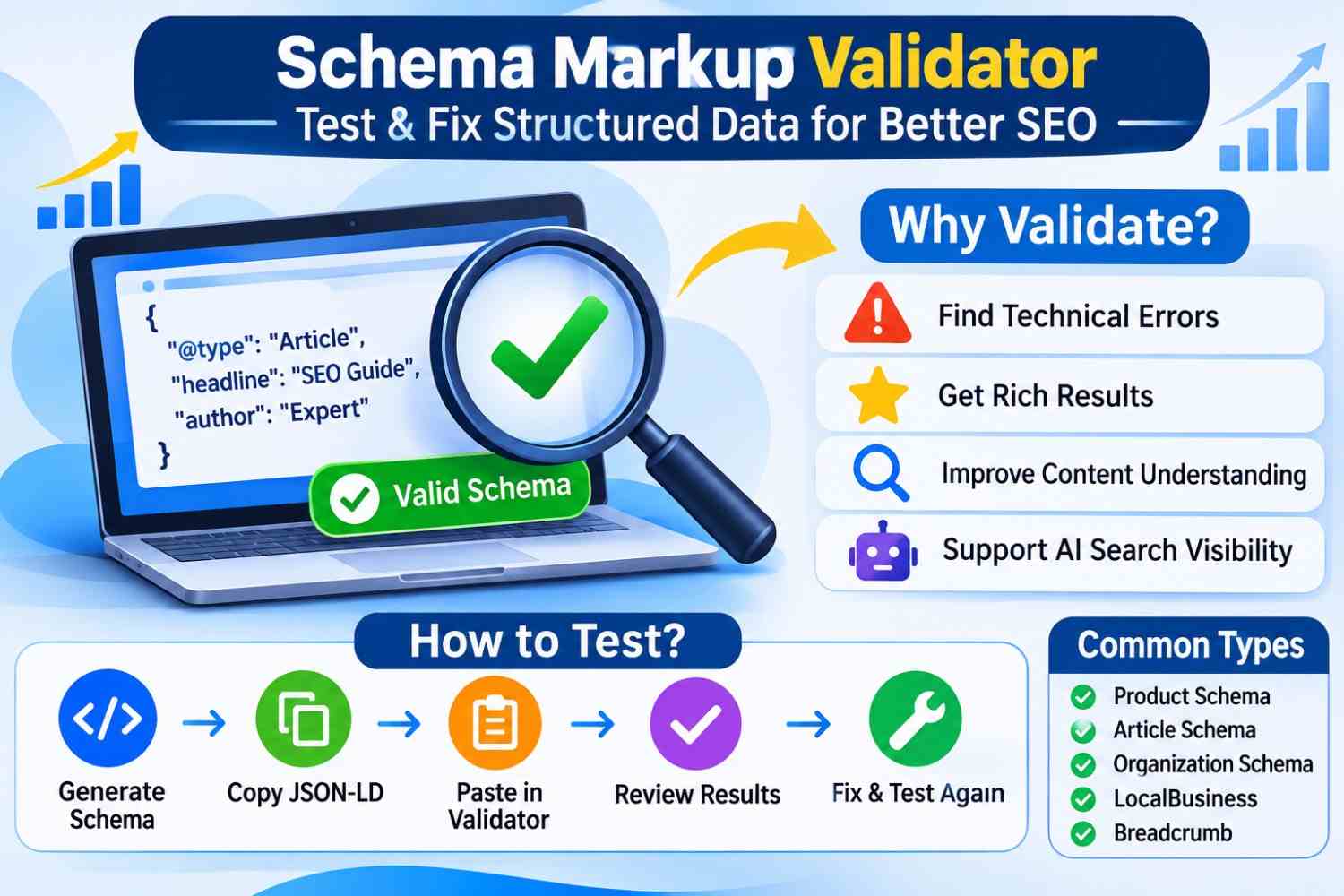
Search engines need more than keywords to understand what a website offers. They also need clear information about its content, products, services, and organization. This is where structured data becomes important. However, incorrect or incomplete schema markup can prevent search engines from interpreting information accurately. A Schema Markup Validator helps website owners identify these issues and improve their structured data implementation.
Whether you manage a WordPress website, Shopify store, or business website, validating schema markup is an important part of technical SEO.
What Is a Schema Markup Validator?
A Schema Markup Validator is an online tool that checks structured data on a website for syntax errors, missing properties, and incorrect Schema.org implementations.
It helps developers and SEO professionals verify whether their JSON-LD, Microdata, or RDFa markup follows the Schema.org vocabulary.
A schema testing tool can help identify:
- Missing required and recommended properties.
- Incorrect JSON-LD formatting.
- Invalid schema types and properties.
- Incomplete Product, Article, and Organization schema.
- Structured data implementation errors.
Regular validation helps maintain accurate structured data across your website.
Why Is Schema Markup Validation Important for SEO?
Schema markup provides search engines with extra information about website content. Properly implemented structured data can make pages eligible for supported Google rich results, including product information, breadcrumbs, and other enhanced search appearances.
A schema markup checker supports your SEO strategy in several ways:
1. Identifies Technical Errors
Even a small formatting mistake can make structured data difficult to process. Validation helps identify these problems before they affect your implementation.
2. Supports Rich Results Eligibility
Valid structured data can help pages qualify for supported rich results, potentially making search listings more informative and engaging.
3. Improves Content Understanding
Structured data helps search engines identify entities, relationships, authors, products, and business information.
4. Supports AI Search Visibility
Accurate structured data provides machine-readable context that can support search engine understanding and broader Generative Engine Optimization (GEO) efforts.
How to Use a Schema Markup Validator
Testing your website's structured data does not require advanced programming knowledge. Follow these steps:
- Generate Your Schema: Create structured data using the appropriate Schema.org type, such as Product, Article, FAQ, or LocalBusiness.
- Copy Your JSON-LD: Copy the generated structured data or obtain the relevant HTML source code.
- Paste Your Markup: Enter your JSON-LD or HTML into an online schema validator.
- Review Validation Results: Check for errors, missing properties, and recommended improvements.
- Fix and Test Again: Correct the identified issues and validate your markup again.
You can also follow our guide on how to add schema markup to your website.
Common Types of Schema Markup to Validate
Different website pages require different structured data types. Some commonly used options include:
- Product Schema: Describes product names, prices, availability, and ratings.
- Article Schema: Identifies article headlines, authors, publishers, and publication dates.
- Organization Schema: Provides information about a business or organization.
- LocalBusiness Schema: Describes business addresses, contact information, and opening hours.
- Breadcrumb Schema: Helps search engines understand website navigation.
Using JSON-LD structured data makes implementation easier because the markup stays separate from visible website content.
Schema Markup Validator vs. Google Rich Results Test
Both tools help test structured data, but they serve different purposes.
The Schema Markup Validator checks Schema.org vocabulary and structured data syntax. Google's Rich Results Test focuses on eligibility for Google-supported rich result features.
For better technical SEO, use both tools when appropriate. Website owners using WordPress can also explore our WordPress schema markup guide.
Final Thoughts
A Schema Markup Validator is an essential tool for identifying structured data errors and maintaining accurate website markup. From JSON-LD validation to Product and Organization schema testing, regular checks help create a stronger technical SEO foundation.
For better results, validate your markup before publishing, fix errors promptly, and keep structured data consistent with visible page content. This approach supports search engine understanding and contributes to your long-term SEO, AEO, and GEO strategy.